In Rotorua, the ground tells a story before the first borehole is even sunk. The city sits inside a caldera formed roughly 240,000 years ago, and the surface layer is often a messy sequence of rhyolitic ash, lacustrine silts, and hydrothermally altered clay. A standard penetration test here isn't a routine checkbox — it's a forensic exercise. When we log an SPT bore near Fenton Street, we expect to hit the Hinuera Ignimbrite within the first few metres, but the blow counts can swing wildly if the profile passes through a paleo-lake deposit. The CPT test can supplement these readings when continuous profiling is needed, but the SPT hammer remains the primary tool for NZS 3404 ground characterisation in the Bay of Plenty.
In Rotorua's geothermal zone, a high SPT N-value in a dry clay doesn't mean strong ground — it means you need to check saturation conditions at depth.
Technical details of the service in Rotorua
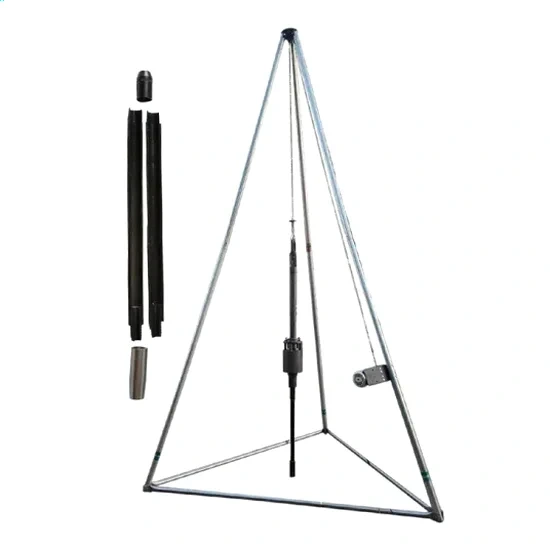
Critical ground factors in Rotorua
The risk profile varies dramatically across the Rotorua urban grid. In the central business district around Tutanekai Street, old lakebed sediments can lose significant strength under seismic shaking, and the NZS 4203 loading code demands site-specific subsoil class determination. A few kilometres south near Ngapuna, the ground transitions into a mix of pumiceous gravels and altered tephra that can collapse under foundation loads if not properly identified during the SPT program. The most dangerous scenario we encounter is a thin crust of competent ignimbrite overlying a soft, compressible silt layer — shallow footings look fine on paper until differential settlement begins. Standard penetration testing through these interfaces, with careful logging of the transition depth, is non-negotiable for any engineered structure.
Our services
Our Rotorua SPT program covers two core service levels, both designed to meet the consenting requirements of the Bay of Plenty Regional Council.
Residential SPT Investigation
Single-borehole programs for new builds and extensions on Rotorua's residential sections. We provide N-values, soil logging, and a foundation recommendation letter for your structural engineer. Typical depth 6–10 m.
Commercial & Geothermal-Area SPT
Multi-borehole campaigns for low-rise commercial, industrial, and geothermal-proximate sites. Includes N60 corrections, moisture content profiling, and NZGS soil classification for seismic subsoil class determination per NZS 1170.5.
Questions and answers
What does an SPT test cost for a residential site in Rotorua?
A single SPT borehole to 6–8 metres depth, with full logging and a summary report, typically falls between NZ$950 and NZ$1,070. The final figure depends on access constraints, traffic management requirements, and whether the hole needs to be cased through caving ground.
How deep do you need to drill for a standard house foundation in Rotorua?
Most residential SPT programs in Rotorua reach 6 to 10 metres. The target is to penetrate through the near-surface ash and pumice layers into competent ignimbrite or a dense gravel unit, confirming at least 3 metres of suitable bearing material below the proposed footing invert.
Can geothermal ground conditions affect the SPT results?
Yes, significantly. Hot ground desiccates clays and silts, producing temporarily elevated blow counts. Our protocol requires logging the ground temperature and moisture condition at each sampling interval, and the report flags any zones where N-values may not represent fully saturated, long-term strength.
What's the difference between SPT and CPT for Rotorua soils?
SPT recovers a physical soil sample, which is essential for identifying Rotorua's hydrothermally altered minerals and pumice content. CPT provides continuous tip resistance and pore pressure data but no sample. On complex geothermal sites, both methods can be complementary.
Do SPT boreholes in Rotorua require any special consents?
Standard SPT drilling does not typically trigger a resource consent, but if the site is within a geothermal bore exclusion zone or a culturally sensitive area near Lake Rotorua, additional consultation with the Regional Council and local hapū may be required. We handle that liaison as part of the job.