Rotorua’s development as a spa town and timber-processing hub from the 1880s onward left a legacy of buildings placed directly on the Rotorua Caldera floor, where hydrothermal activity constantly reshapes subsurface conditions. Designing shallow foundations here means dealing with ground that can be 60 °C at less than two metres depth, chemically altered rhyolitic tephra, and sulphurous groundwater that corrodes standard concrete. Our laboratory has run bearing capacity programmes on Rotorua formation soils for residential subdivisions in Ngapuna, commercial builds along Fenton Street, and light industrial sheds near the Waipa State Mill Road area. Each project confirms that generic North Island assumptions fail once you encounter the steaming ground and soft lacustrine silts common across the southern lakefront suburbs. We work with the NZGS guideline framework to match footing geometry with the actual undrained shear strength measured from undisturbed samples, not just SPT blow counts taken in collapsing pumice layers. When the site sits inside the Rotorua Geothermal System boundary, we routinely pair our shallow foundation analysis with a seismic microzonation study to capture how hydrothermal alteration amplifies ground motion differently from unaltered ignimbrite profiles found outside the caldera margin.
In Rotorua, footing design is as much about managing chemical aggression and thermal moisture movement as it is about bearing capacity — ignore either and the concrete deteriorates within a decade.
Technical details of the service in Rotorua
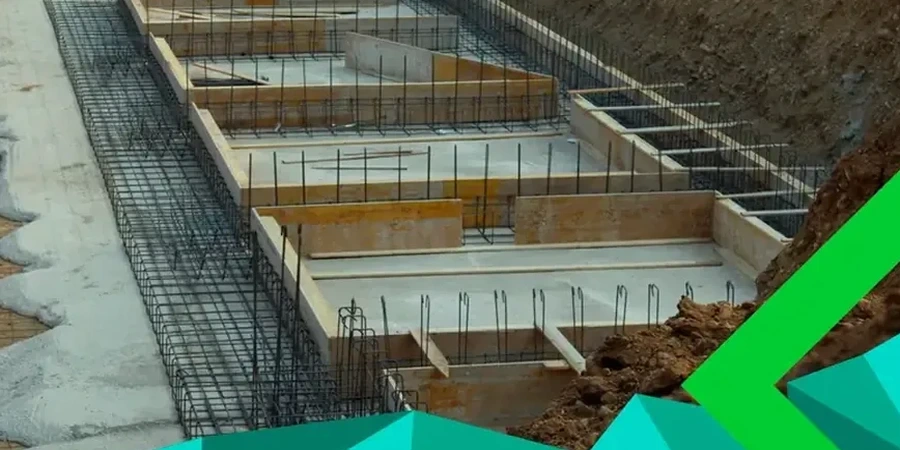
Critical ground factors in Rotorua
NZS 3404 and the NZGS guidelines provide clear pathways for shallow foundation verification, but Rotorua’s geothermal setting introduces hazards that generic standards do not fully capture. Differential thermal expansion of footings spanning a steam zone can crack a slab-on-grade within three wet-dry cycles, and we have measured temperature differentials of 25 °C across a single residential footprint in the Whakarewarewa area. Hydrothermal eruption vents, though rare, have historically opened within built-up zones, and the Rotorua Caldera boundary roughly coincides with the city’s most densely developed land. Our risk assessments include mapping of known thermal features within 200 m of the site, interpreting both Boring Log records and GNS Science geothermal datasets, so the foundation design accounts for possible future ground temperature shifts over the structure’s 50-year design life. In the lake-edge suburbs, undetected liquefiable pumice layers within 3 m of the surface pose a bearing loss risk that standard SPT-based assessments can underestimate if the pumice crushes during driving.
Our services
Our Rotorua shallow foundation design package covers the full chain from subsurface characterisation to bearing capacity verification, adapted specifically for the caldera environment. Each deliverable is signed off by a Chartered Professional Engineer familiar with the Rotorua Geothermal System and the peculiarities of hydrothermally altered soils.
Bearing Capacity Assessment
Calculation of ultimate and allowable bearing pressures using undrained shear strength from triaxial testing and CPT tip resistance, with reduction factors applied for thermal degradation of soil strength in zones above the steam table.
Settlement and Differential Settlement Analysis
Elastic and consolidation settlement predictions for strip, pad, and raft foundations on layered Rotorua tephra sequences, incorporating stiffness modulus reduction calibrated from laboratory consolidation tests on undisturbed samples.
Geothermal Ground Aggressivity Profiling
Soil pH, resistivity, and sulphate content testing at footing depth to specify the correct concrete exposure class and minimum cover to reinforcement, preventing premature deterioration in Rotorua’s acidic groundwater environment.
Thermal Gradient Mapping for Foundation Design
Installation of thermocouple strings in boreholes to measure ground temperature profiles, used to adjust footing geometry and reinforcement detailing where thermal gradients exceed 10 °C/m across the foundation footprint.
Questions and answers
What is the typical cost for a shallow foundation design report for a residential section in Rotorua?
For a standard single-dwelling section in Rotorua, the shallow foundation design and bearing capacity verification usually falls between NZ$3,580 and NZ$5,780, depending on whether we need one or two trial pits, the number of laboratory triaxial tests required, and the complexity of the geothermal ground profiling. Sections within the high-temperature zone or near mapped thermal features tend toward the upper end because of the extra chemical testing and thermal gradient instrumentation involved.
How does geothermal activity affect shallow footing performance in Rotorua?
Geothermal activity primarily affects footings through three mechanisms: elevated ground temperatures that reduce soil strength and increase moisture movement, acidic groundwater that attacks concrete and steel reinforcement, and thermal expansion/contraction cycles that can cause differential movement across a foundation. Our design process measures each of these factors at the specific site so the footing depth, concrete mix, and reinforcement layout are tailored to the actual ground conditions rather than generic assumptions.
What depth of ground investigation is required for a shallow foundation in Rotorua?
We typically investigate to a depth of at least 3 to 5 metres below the proposed founding level, which often means excavating trial pits or drilling boreholes 5 to 8 metres deep in Rotorua. This depth is necessary to pass through the surficial Rotorua Lapilli and into the underlying Mamaku Ignimbrite or lacustrine sediments, and to measure the thermal gradient across the zone that will influence the footing over its service life.
Can standard NZS 3604 foundations be used on Rotorua's geothermal ground?
NZS 3604 applies only to 'good ground' as defined in the standard, and many Rotorua sites with active hydrothermal alteration, soft lacustrine silts, or ground temperatures exceeding 25 °C at footing depth do not meet that definition. In those cases, specific engineering design under NZS 3404 or NZS 3101 is required. Our assessment determines whether a site qualifies for 3604 or needs a tailored shallow foundation solution, saving you the risk of a building consent refusal.