A 15-meter deep excavation near Fenton Street hit fractured rhyolite with water flowing at 12 liters per minute. The contractor needed a reliable Lugeon value within 5 hours to seal the face before a geothermal gas pocket was intercepted. That is the reality of working in Rotorua. The in-situ permeability team mobilized the same day. Two boreholes, five test stages, and a packer set at 11 meters. The Lugeon pattern showed a value of 23 Lu, confirming open, interconnected fractures. We recommended a cement-bentonite grout mix with 2% accelerator. The excavation restarted the next morning without a drop of water. Rotorua basements demand this speed because conditions change fast when you cut into the rhyolite and ignimbrite layers that dominate the caldera rim.
A Lugeon value above 20 Lu in Rotorua rhyolite signals open fractures that grout will travel through for meters. We design the mix accordingly.
Technical details of the service in Rotorua
Critical ground factors in Rotorua
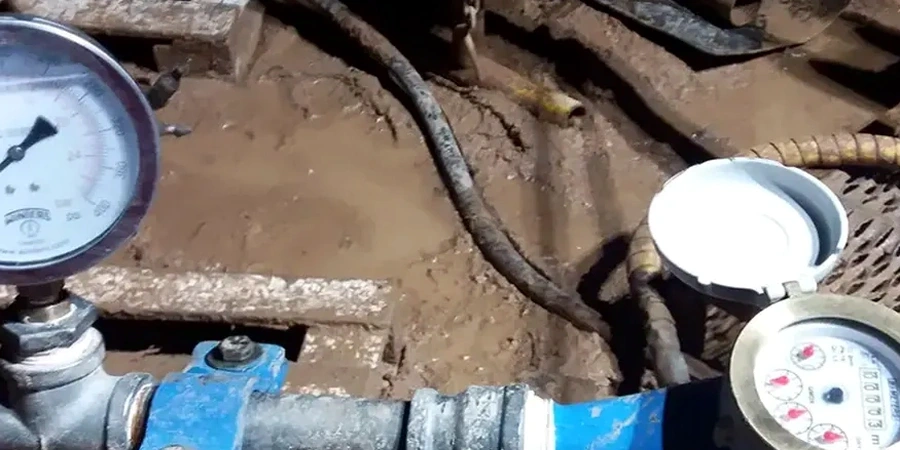
We use a truck-mounted hydraulic feed with a double-packer assembly rated to 20 bar. In Rotorua, the main risk is packer bypass in highly fractured rhyolite. When we see a Lu value spike above 80 with no pressure decay, the seal is compromised. We pull the tool, reset the packer 0.5 meters deeper, and retest. A second risk is geothermal fluid flashing inside the test interval. If the temperature exceeds 95°C at 3-bar pressure, we abort the stage, cool the borehole with ambient water for 20 minutes, and restart. The third risk is misinterpretation of test data when the water table is artesian. In the Kuirau Park area, groundwater can be 2 meters above ground level. We install a wellhead with a calibrated pressure gauge and correct the Lugeon calculation using a back-pressure equation. Ignoring artesian conditions leads to underestimating permeability by 40% or more.
Our services
Our Rotorua-based field permeability program covers the full spectrum of in-situ testing, from shallow Lefranc to deep Lugeon, with geothermal-adapted equipment and IANZ-accredited reporting.
Lugeon Test Program
Multi-stage pressure testing in rock from 6 m to 60 m depth. Double-packer isolation, 5 pressure steps per stage, Lu value calculation with correction for artesian conditions.
Lefranc Variable-Head Test
Constant or falling-head permeability measurement in soil and pumice alluvium. Suitable for excavations, infiltration trenches, and pre-consolidation drainage design.
Geothermal Permeability Assessment
Temperature and pH-monitored testing with heat-resistant packers. Includes fluid chemistry sampling and grout compatibility analysis for high-temperature ground.
Questions and answers
What is the difference between Lefranc and Lugeon tests?
The Lefranc test measures permeability in soil or granular material using a single-packer or open-borehole setup with constant or falling head. It applies to alluvium, pumice sand, and fill. The Lugeon test is designed for rock. We isolate a 3-meter interval with a double packer and inject water at five pressure steps. The result is expressed in Lugeon units (1 Lu ≈ 1.3 × 10⁻⁷ m/s). In Rotorua, Lefranc is used for the upper pumice and lacustrine layers, and Lugeon takes over once we hit rhyolite or ignimbrite.
How much does a field permeability test cost in Rotorua?
A standard Lefranc or Lugeon test program in Rotorua ranges from NZ$1,020 to NZ$1,760 per test zone, depending on depth, number of pressure stages, and whether geothermal-resistant equipment is required. A full program with 5 test intervals typically falls between NZ$5,100 and NZ$8,800 including mobilization, drilling, testing, and the IANZ-accredited report.
How does geothermal heat affect the permeability test?
High-temperature groundwater degrades standard rubber packers and can cause water to flash to steam inside the test interval, producing false pressure readings. We use pneumatic packers with heat-resistant bladders rated to 90°C. We also monitor temperature and pH continuously. If the interval exceeds 95°C, we pause, cool the borehole with ambient water, and restart the test stage.
How long does it take to get the test results?
Field data is recorded digitally and reviewed by our engineer on site. Preliminary Lu values are available the same day, usually within 4 hours of test completion. The final IANZ-accredited report with pressure-flow plots, Lugeon pattern analysis, and grout take estimates is delivered within 48 hours.
What depth can you test with the Lugeon method?
We can test intervals from 5 meters down to 60 meters using truck-mounted hydraulic feed and NQ or HX casing. The depth limit in Rotorua is usually not the equipment but the formation: in highly fractured zones below 40 meters, packer seating becomes difficult and we may need to shorten the test interval to 2 meters to achieve a reliable seal.