In Rotorua, you cannot separate foundation engineering from the geothermal system that lies just beneath the surface. The city sits squarely within the Taupo Volcanic Zone, where ground temperatures can exceed 100°C at depths of less than two metres in some areas, and where hydrothermally altered soils lose much of their original strength. Designing pile foundations here means accounting for thermal gradients that affect concrete curing and steel corrosion rates, something a generic North Island specification rarely covers. The technical team routinely integrates thermal resistivity testing with geotechnical data to select appropriate pile materials and protective measures. When the near-surface soils are too aggressive or compressible, transferring load to a deeper, more competent ignimbrite layer becomes the primary objective. This is not simply about bearing capacity; it is about long-term durability in an environment that actively attacks conventional construction materials, making a properly scoped CPT test invaluable for profiling the transition from weak geothermal silts to sound rock.
In Rotorua, a pile is not just a structural element — it is a thermal bridge between the building and a 250°C hydrothermal reservoir.
Technical details of the service in Rotorua
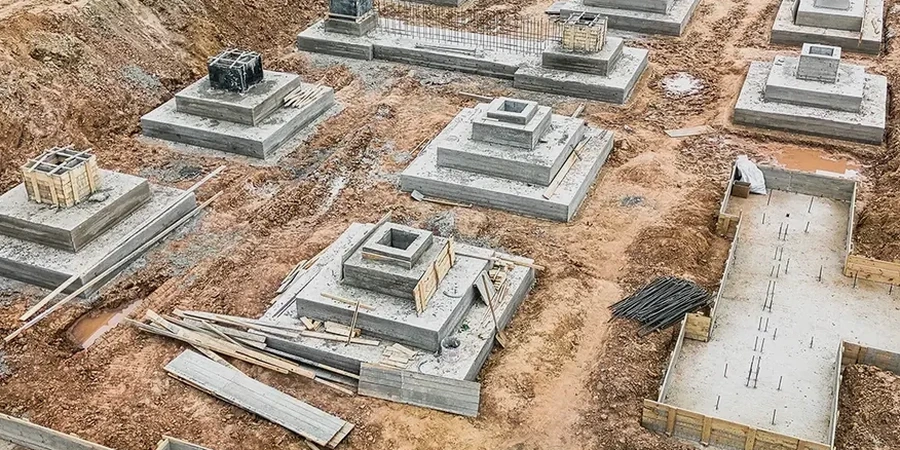
Critical ground factors in Rotorua
The Rotorua geothermal field introduces a risk factor rarely considered in standard piling: hydrothermal alteration. Acidic groundwater, rich in dissolved CO₂ and H₂S, chemically weathers the rhyolitic host rock into soft kaolinite and smectite clays. These alteration halos can extend tens of metres laterally around active faults and fractures, creating pockets of extremely low-strength material that are invisible from the surface. A pile designed for unaltered ignimbrite parameters could punch through into a clay-filled cavity or experience severe negative skin friction as the altered material consolidates around the shaft. Furthermore, the dynamic response of the pile group shifts when the surrounding soil loses stiffness during long-duration shaking from a Taupo Volcanic Zone event. The design must explicitly model the potential loss of lateral support over the upper 3 to 5 metres, which often requires a larger diameter casing or a deeper socket. Without a detailed geothermal risk assessment integrated into the geotechnical report, the foundation is essentially blind to the most critical local hazard.
Our services
The pile design process for Rotorua sites integrates thermal, geochemical, and seismic inputs from the earliest stages of investigation. The following services form the core of the technical delivery:
Thermal Response Pile Analysis
Evaluation of heat transfer from the geothermal reservoir into the pile shaft, including the design of thermal breaks or venting systems where ground temperatures exceed the service limits of conventional concrete and steel.
Seismic Pile Group Design
Full dynamic analysis of pile groups under NZS 4203 spectra, incorporating site-specific soil-structure interaction and the degradation of lateral soil stiffness in hydrothermally altered zones.
Corrosion Protection Specification
Selection and detailing of protective systems — HDPE encapsulation, increased sacrificial steel thickness, and cathodic protection — based on direct measurement of soil pH, resistivity, and dissolved gas content.
Questions and answers
How does geothermal heat affect concrete piles in Rotorua?
High ground temperatures accelerate the curing of concrete, which can reduce final strength and increase permeability. Temperatures above 60°C also promote sulphate attack and delayed ettringite formation. The design specifies low-heat, sulphate-resistant cement blends and often includes physical insulation or a ventilated air gap around the upper shaft to keep the pile within normal service temperature ranges.
What is the typical depth of piles in Rotorua?
Pile depth depends entirely on the depth to competent ignimbrite. In the city centre and along the lakefront, altered overburden can extend 8 to 15 metres before reaching the Mamaku Ignimbrite. In hillside subdivisions on rhyolite domes, refusal may occur within 3 to 5 metres. Each site requires a specific investigation; we never apply a blanket depth assumption.
What is the cost range for a pile foundation design package in Rotorua?
A complete design package, including thermal profiling, CPTu data interpretation, and final pile schedules, typically ranges from NZ$3,210 to NZ$10,830 depending on the building footprint, number of piles, and the complexity of the geothermal assessment required.
Are driven steel piles suitable for Rotorua’s corrosive ground conditions?
Driven steel H-piles can be used, but they require a rigorous corrosion assessment. The acidic, moist soils common in geothermal areas demand either a significant sacrificial steel allowance or a protective coating system. In highly aggressive zones, we often recommend concrete-encased steel sections or full-displacement screw piles with post-grouting to isolate the steel from the soil.
How do you verify the capacity of piles installed in altered rock?
Capacity verification combines installation records with high-strain dynamic testing (PDA) on a representative sample of production piles. In critical areas where altered clay seams are suspected, we specify one or two static load tests to calibrate the dynamic results and confirm that the socket friction in the altered zone performs as modelled.