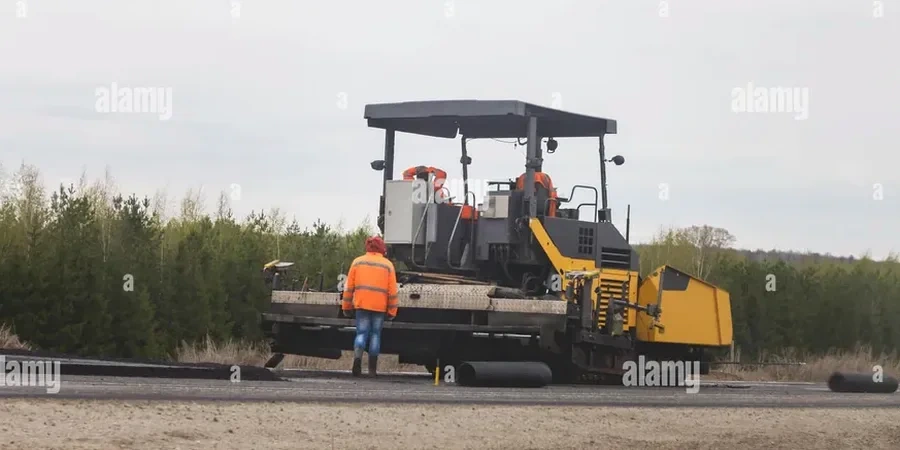
A 12-tonne smooth drum roller compacts the final granular layer while a nuclear density gauge confirms 98% modified Proctor behind it. That scene plays out on Rotorua streets daily, but the design beneath the asphalt matters far more than the compaction on top. Rotorua’s subgrades rarely behave like textbook soils: thin crusts over hot ground, acid-sulphate weathering, and soft lacustrine silts around the lake margins demand pavement cross-sections built on real local data, not generic catalogue values. We combine test pits logged to NZGS guidelines with laboratory CBR and Atterberg series to establish the design subgrade strength, then build the granular structure upward—basecourse, subbase, and surfacing—using TNZ M/4 and Austroads mechanistic-empirical principles. The geothermal influence across the Rotorua caldera means temperature gradients in the subgrade can shift moisture equilibrium; ignoring that leads to rutting within three seasons.
Pavement design in Rotorua is a drainage-and-moisture problem before it is a thickness problem; get the water out and the layers hold.
Technical details of the service in Rotorua
Critical ground factors in Rotorua
Rotorua’s surface geology is dominated by rhyolitic lavas and pyroclastic fall deposits of the Taupo Volcanic Zone, capped by soft, moisture-sensitive pumiceous ash that loses strength when wet. Shallow groundwater and hydrothermal alteration produce acid-sulphate conditions that attack untreated aggregate over time. The pavement risk profile here includes thermal subsidence, uneven moisture distribution beneath sealed surfaces, and subgrade weakening from trapped capillary water. Without a site-specific design that addresses drainage, vapour barriers, and chemical stabilisation where needed, the pavement can develop fatigue cracking, potholing, and shoulder deformation far earlier than the design life predicts. The 2016 Kaikōura earthquake sequence, though centred farther south, reminded North Island engineers that even distant seismic events can disrupt pavement continuity through lateral spread in soft lacustrine soils—Rotorua’s southern lake-edge roads are particularly exposed.
Our services
Our Rotorua pavement design support covers the full delivery chain, from subgrade characterisation through to surfacing specification and construction-phase QA testing.
Subgrade investigation & CBR profile
Test pitting and dynamic cone penetrometer transects to establish design CBR and identify weak zones, logged to NZGS field description standards.
Pavement structural design (flexible)
Layer thickness and material specification using Austroads mechanistic-empirical method, calibrated for Rotorua subgrade conditions and design ESA loading.
Stabilisation mix design & verification
Lime and cement stabilisation trials on pumice silts, with UCS and CBR confirmation testing to validate design strength gain before construction.
Construction-phase compaction & QA testing
Nuclear density gauge and sand cone density correlation, plus aggregate gradation and PI checks on placed basecourse and subbase layers.
Questions and answers
What does flexible pavement design cost for a typical Rotorua residential subdivision road?
For a local residential road of approximately 150–250 linear metres, the design package including subgrade investigation, CBR testing, and pavement cross-section report typically falls between NZ$3,150 and NZ$9,620, depending on the extent of stabilisation trials and the number of test pit locations required.
Why does Rotorua’s geothermal ground require a different pavement approach than standard North Island sites?
Rotorua sits on the Rotorua Caldera within the Taupo Volcanic Zone. Shallow ground temperatures, acid-sulphate alteration of pumice soils, and high moisture variability mean the subgrade can lose strength rapidly if drainage is not designed for thermal gradients. Standard catalogue designs often underestimate the required stabilisation depth and the need for vapour barriers under sealed surfaces.
Do you use CBR or resilient modulus for Rotorua pavement design?
We use soaked CBR as the primary design input, in accordance with the Austroads guide and TNZ practice, and correlate it to resilient modulus where mechanistic analysis requires it. For critical arterial roads we run repeated-load triaxial testing on stabilised subgrade specimens to confirm the modulus values used in the design model.