In-situ testing forms the backbone of reliable geotechnical investigation across the Rotorua region, delivering direct measurements of soil and rock properties without the disturbance inherent in laboratory sampling. This category encompasses a suite of field-based procedures designed to evaluate ground conditions precisely where they exist, from assessing compaction quality with a field density test (sand cone method) to measuring hydraulic conductivity through field permeability tests (Lefranc/Lugeon). For a city built upon the dynamic landscape of the Taupo Volcanic Zone, understanding the ground's actual behaviour under load and flow is not just a technical requirement—it is a fundamental necessity for safe and durable development.
Rotorua's unique geological setting demands a rigorous approach to subsurface investigation. The city sits atop a complex sequence of volcanic deposits, including soft, compressible lacustrine sediments, variable layers of alluvial silts and sands, and the highly sensitive, moisture-rich soils derived from weathered rhyolitic tephra. These materials can exhibit significant variability over short distances and are prone to issues like hydrothermal alteration, high compressibility, and liquefaction potential. Shallow groundwater tables, often influenced by the area's famed geothermal activity, further complicate the geotechnical picture. Standard laboratory tests on disturbed samples often fail to capture the true in-situ state of these complex volcanic soils, making field testing the definitive method for accurate characterisation.
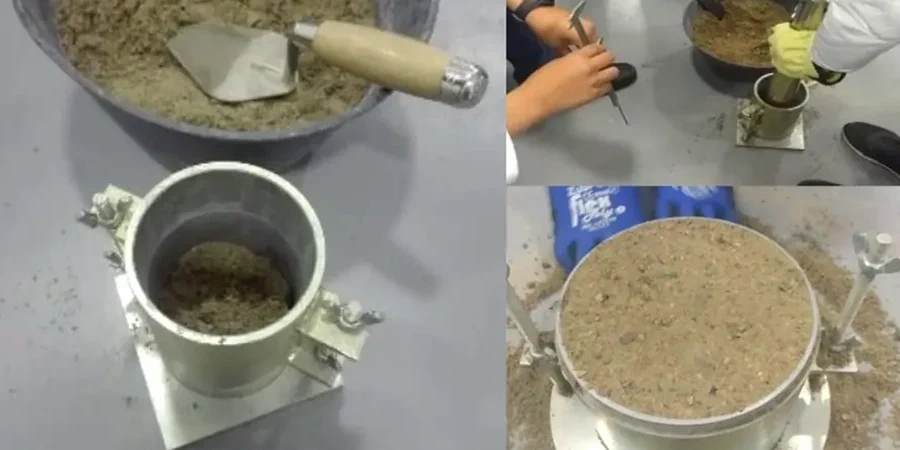
All in-situ testing in New Zealand is governed by the framework of the New Zealand Building Code (Clause B1 – Structure) and must be performed in accordance with established standards, primarily the NZGS (New Zealand Geotechnical Society) guidelines and relevant parts of the NZS 4402 series for soil testing methods. For critical assessments like bearing capacity, the plate load test (PLT) is executed following procedures aligned with international standards such as ASTM D1194, adapted to suit local ground conditions. These tests provide the essential design parameters—allowable bearing pressure, settlement characteristics, and permeability coefficients—that engineers need to comply with the Building Code and satisfy consenting authorities like the Rotorua Lakes Council.
The range of projects requiring in-situ testing in Rotorua is as diverse as the region itself. From residential subdivisions on the city's expanding fringes to commercial structures in the CBD and infrastructure like sewer and stormwater systems, each project type demands specific data. A field density test is critical for verifying the compaction of engineered fill beneath a new housing platform, while a Lefranc test is vital for designing stormwater soakage systems in areas with tight, silty soils. For larger commercial buildings or bridge abutments, a plate load test directly validates foundation design assumptions, preventing costly over-design or, worse, structural distress. Even for geothermal developments, understanding in-situ permeability is paramount for managing subsurface fluids.
Questions and answers
Why is in-situ testing often preferred over laboratory testing for Rotorua’s volcanic soils?
Rotorua's volcanic soils, including pumice sands and sensitive silts, are highly susceptible to disturbance during sampling and transport. In-situ testing measures properties like density, strength, and permeability in their natural state, preserving moisture content, stress conditions, and fabric structure. This provides a more accurate representation of ground behaviour, which is crucial for reliable design on these often-compressible and variable deposits.
What New Zealand standards govern in-situ testing procedures on construction sites?
In-situ testing in New Zealand is guided by the NZGS guidelines and the NZS 4402 series for soil testing methods. For specific tests, international standards like ASTM D1194 for plate load tests are adapted to local practice. All work must support compliance with the New Zealand Building Code Clause B1 (Structure), ensuring that the derived geotechnical parameters meet the requirements of the Rotorua Lakes Council for building consent.
How do I determine which type of in-situ test is right for my project in Rotorua?
The appropriate test depends on the project's objectives and the ground conditions. For assessing compaction of structural fill, a field density test is standard. For foundation design, a plate load test provides direct bearing capacity and settlement data. If drainage or groundwater control is a concern, field permeability tests using the Lefranc or Lugeon method are essential. A geotechnical engineer will specify the correct combination after reviewing the site's geology.
Can in-situ testing be conducted in Rotorua’s geothermal areas, and are there special considerations?
Yes, testing can be conducted, but geothermal areas present unique challenges such as elevated ground temperatures, corrosive fluids, and highly altered, soft ground. Specialised equipment and safety protocols are often required. The primary considerations are managing the hydrothermal conditions and interpreting results in the context of chemically altered soils, where standard empirical correlations may not apply, making direct in-situ measurement even more critical.