Many Rotorua builds stall when shallow foundations meet unexpected compressible layers. The culprit is often a standard investigation that missed thin seams of hydrothermal clay or loose pumice, precisely the kind of hazard a Cone Penetration Test is designed to catch. Our team runs CPT rigs across the city, from Ngongotahā silt flats to the fractured rhyolite margins near Whakarewarewa. We have seen too many budget blowouts from test pits that bottomed out early, leaving the critical 5 to 15-metre band entirely unverified. Continuous profiling with CPT eliminates that blind spot, delivering a friction ratio and pore pressure log that speaks directly to the NZGS guidelines for volcanic terrain.
In Rotorua's geothermal fields, a single missed lens of hydrothermal clay thinner than a brick can dictate the entire foundation strategy.
Technical details of the service in Rotorua
Critical ground factors in Rotorua
The Taupo Volcanic Zone is restless, and Rotorua sits squarely within it. Much of the city is underlain by the Rotorua Caldera infill: a layered sequence of lacustrine silts, alluvial gravels, and the Mamaku Ignimbrite. The real risk lies in the hydrothermal alteration zones, where fumarolic acids and hot fluids have turned competent ash into soft, montmorillonite-rich clay with a residual friction angle sometimes below 12 degrees. A structure founded without CPT data through these zones can experience differential settlement of 50 mm or more within the first two years. Liquefaction is another live concern; the loose pumice sands south of the lake, when saturated, can trigger a sudden loss of cone resistance at depths between 3 and 8 metres. We calculate the soil behaviour type index (Ic) directly from the CPT trace to flag these collapsible materials before they become a lawsuit.
Our services
Our CPT services in the Rotorua region are configured around the ground conditions you actually encounter, not generic textbook profiles.
Piezocone (CPTu) Profiling
Full pore pressure measurement during penetration. We use a saturated filter element to detect even thin draining layers within the Rotorua caldera silts, giving you the coefficient of consolidation from dissipation tests.
Seismic CPT (SCPTu)
Intermittent downhole shear wave velocity measurements paired with cone data. Essential for generating site-specific VS30 profiles for NZS 1170.5 seismic design on the Mamaku Ignimbrite contact.
Thermally Compensated Deep CPT
For the high-temperature ground near Whakarewarewa and Sulphur Point. Our cones are calibrated for thermal gradients up to 80°C to prevent zero-shift on the sleeve and tip sensors.
Questions and answers
What does a CPT test cost in Rotorua?
For standard piezocone testing within the Rotorua urban area, budget between NZ$270 and NZ$400 per sounding point. The rate depends on the target depth, the need for seismic add-ons, and the mobilization distance. A full SCPTu profile to 20 metres with dissipation stops will sit at the upper end. Each quote includes the engineering report with soil behaviour type classification.
How is CPT data interpreted for Rotorua's geothermal soils?
We apply the Robertson (1990) normalized charts but with a regional correction for diatomaceous silt and hydrothermal clay. The very low sleeve friction in these altered soils can sometimes mimic soft organic clay; we cross-reference the pore pressure parameter (Bq) and temperature log to distinguish geothermal alteration from true organic deposits.
Can a CPT rig access difficult terrain in Rotorua caldera sites?
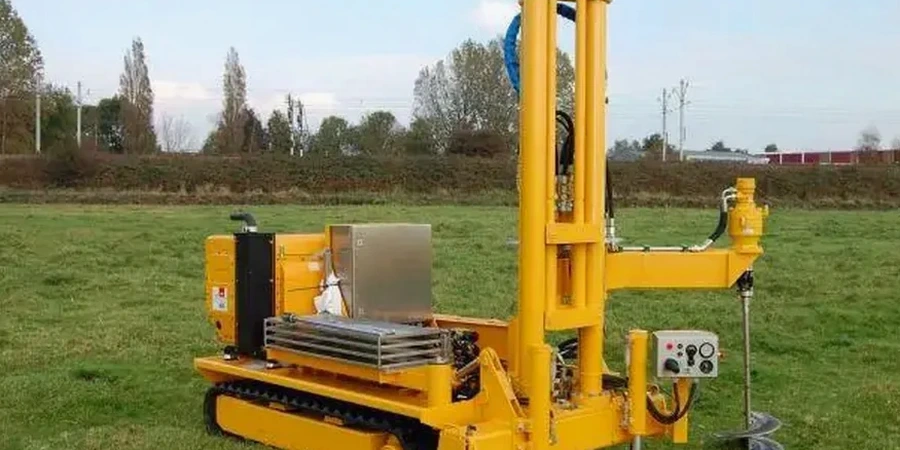
Our 20-tonne truck-mounted rig handles most commercial sites, but for restricted access near lake edges or forested pumice slopes we deploy a tracked crawler unit with a 1.2-metre width. The crawler carries the same 200 kN push capacity and can operate on slopes up to 25 degrees.