In Rotorua, we often see engineers surprised when a soil that looked stable during excavation turns into slurry after a few days of rain. That shift is exactly what Atterberg limits testing quantifies. The volcanic ash deposits and hydrothermal clays around Lake Rotorua and the geothermal fields have plasticity characteristics that can catch out even experienced contractors. Knowing the liquid limit and plastic limit of these materials before you place a footing or cut a batter is not just good practice. It is the difference between a design that holds and one that fails. We run the full set of Atterberg limits in our laboratory on Pukehangi Road, following NZS 4402 methods, and the numbers we get from weathered rhyolitic tephra layers often tell a story the borelog alone cannot. For shallow foundations on the Mamaku Ignimbrite-derived soils, we pair the plasticity index with a triaxial shear test when the moisture content is close to the plastic limit, because that is where undrained strength can drop sharply.
Volcanic ash soils in Rotorua can swing from silty to highly plastic within half a metre of depth. Atterberg limits catch that transition before the excavator does.
Technical details of the service in Rotorua
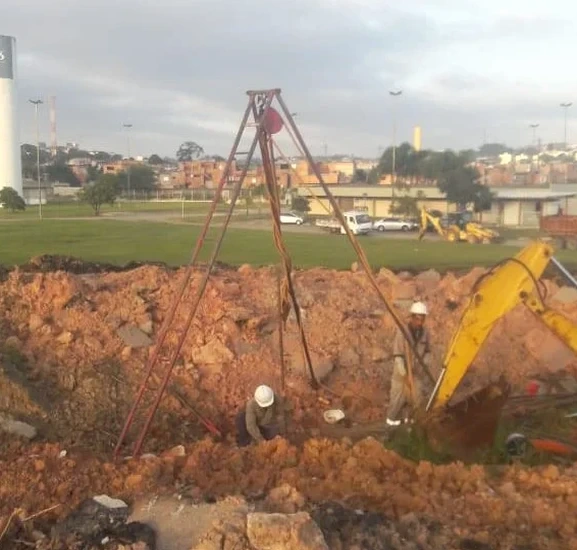
Critical ground factors in Rotorua
The classic mistake we see in Rotorua is a contractor treating the widespread Rotorua brown ash as a low-plasticity silt and compacting it at moisture contents well above the optimum, simply because it feels sandy when dry. A few months later, the floor slab shows differential movement, and the homeowner is asking questions. When the Atterberg limits reveal a PI above 25%, that soil is going to move with every wet-dry cycle, and standard NZS 3604 foundation details may not be adequate. We have dealt with sites along the Utuhina Stream where the alluvial clays have a liquid limit exceeding 100%, meaning they are essentially liquid at modest water contents. Designing a retaining wall or a driveway on that material without knowing the plasticity characteristics is a gamble. The cost of the Atterberg test is negligible compared to the cost of underpinning a settled structure later. In geothermal areas, the elevated ground temperatures can accelerate drying and exacerbate shrinkage cracks, making the plasticity data even more critical for long-term performance.
Our services
Our Rotorua laboratory provides Atterberg limits testing as a standalone service or as part of a broader geotechnical investigation package. Each test is run by a technician familiar with the peculiar behaviour of volcanic-derived soils, and the report includes the full classification chart and commentary on the implications for your project.
Standard Atterberg Limits Package
Determination of liquid limit, plastic limit and plasticity index on a single sample, with moisture content and USCS classification. Suitable for building consent documentation under NZS 3604. Results within three working days.
Soil Activity and Shrink-Swell Assessment
Extended Atterberg testing including shrinkage limit and clay fraction analysis by hydrometer to calculate soil activity. Recommended for expansive soil sites in Rotorua's eastern suburbs where deep clay profiles are encountered. Includes a shrink-swell potential rating.
Questions and answers
What do Atterberg limits testing cost in Rotorua?
For a standard Atterberg limits test covering liquid limit, plastic limit and plasticity index on one sample, the cost ranges from NZ$90 to NZ$170 depending on the number of samples and whether supplementary tests like a particle size distribution are required. If you need the full suite with shrinkage limit and hydrometer, the price increases accordingly. We can provide a fixed quote once we know the project scope and the number of samples you are submitting.
How long does it take to get Atterberg limits results for a Rotorua site?
We typically report standard Atterberg limits (LL, PL, PI) within three working days of receiving the sample at our Rotorua laboratory. If the project is urgent and the soil is not highly organic, we can sometimes turn around results in 24 hours. Samples that require air-drying or pre-treatment for high organic content, such as some of the peaty silts near the lake edge, may need an extra day.
Why are Atterberg limits so important for the volcanic soils in Rotorua specifically?
Rotorua's volcanic ash soils, especially the halloysite-rich tephras, can have unexpectedly high plasticity despite feeling silty or sandy in the hand. Atterberg limits testing identifies whether the soil behaves as a silt (ML) or a high-plasticity clay (CH), which changes the foundation design parameters completely. In areas with fluctuating groundwater, such as the lakefront or the geothermal fields, a high plasticity index signals a serious shrink-swell risk that must be addressed in the structural design.