Geotechnical site investigation in Rotorua is the foundational process of understanding what lies beneath the surface before any construction or earthworks begin. This category encompasses a suite of subsurface exploration techniques designed to characterise soil, rock, and groundwater conditions. In a region shaped by dynamic geothermal and volcanic processes, skipping this step is not just risky—it is a direct threat to structural integrity and public safety. A thorough investigation informs foundation design, earthwork specifications, and long-term asset resilience by identifying hazards like soft lacustrine sediments, hydrothermal alteration zones, and shallow groundwater tables.
Rotorua’s geology is uniquely complex, sitting squarely within the Taupō Volcanic Zone. The city is underlain by a mosaic of volcanic deposits, including thick sequences of alluvial and lacustrine sediments from ancestral Lake Rotorua, interbedded with layers of rhyolitic ignimbrite, tephra fall deposits, and unconsolidated pumiceous sands. The geothermal activity adds another critical layer of complexity; ground temperatures can be elevated, and chemically altered soils with reduced bearing capacity are common. This landscape demands investigation methods that go beyond standard soil logging, making techniques like the Cone Penetration Test (CPT) invaluable for profiling soft, compressible layers and detecting geothermal anomalies with near-continuous data.
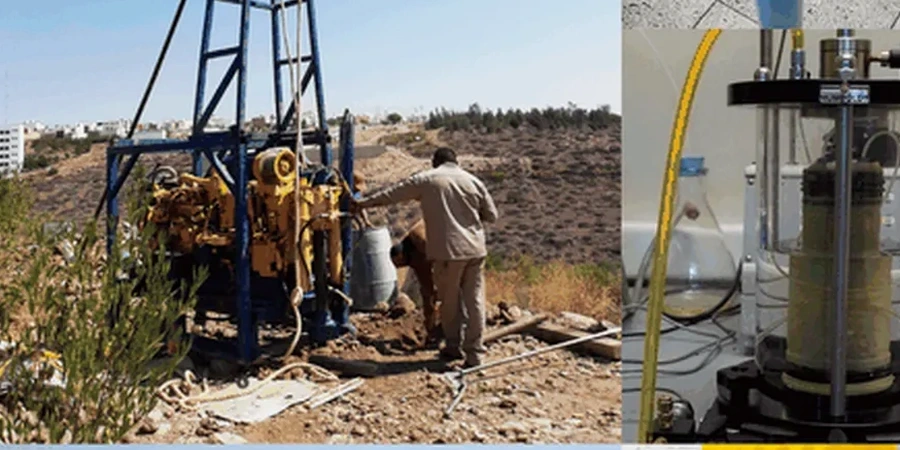
Regulatory compliance in New Zealand is governed primarily by the Building Code, specifically Clause B1 Structure, which mandates that buildings must be founded on ground with adequate bearing capacity and durability. The Acceptable Solution B1/AS1 refers directly to NZS 4402 for soil testing methods and NZS 1170.5 for seismic considerations, the latter being critically important in Rotorua’s seismically active setting. The New Zealand Geotechnical Society’s guidelines, alongside MBIE’s guidance documents for building on geothermally active land, form the professional standard of care. A proper investigation must demonstrate compliance with these documents, and for sites with geothermal influence, specific council consent conditions often require detailed thermal and chemical assessment of soils.
The types of projects that demand a comprehensive site investigation are broad. For residential developments on the city’s expanding fringes, where sensitive lacustrine clays are prevalent, exploratory test pits provide a direct visual assessment of soil profiles and allow for undisturbed sampling. For multi-storey commercial structures or industrial buildings with heavy floor loads in the central city, the Standard Penetration Test (SPT) remains a staple for determining relative density and strength parameters in deeper, potentially cemented layers. Infrastructure projects, such as pipeline routes traversing geothermal fields, rely on a combination of these methods to map zones of aggressive ground chemistry that can corrode concrete and steel within years.
Questions and answers
Why is a geotechnical investigation essential before building in Rotorua?
Rotorua’s location in the Taupō Volcanic Zone means the ground conditions are highly variable, including soft lake sediments, volcanic ash layers, and areas of geothermal alteration. A site investigation identifies these hazards, determining bearing capacity and settlement potential to prevent structural failure. It also satisfies the New Zealand Building Code Clause B1, ensuring foundations are designed for the specific and often challenging local ground conditions.
What depth should a site investigation typically reach for a standard residential project in Rotorua?
The required depth depends on the foundation loads and subsurface geology, but typically extends through the compressible near-surface pumiceous and lacustrine layers to reach competent ignimbrite or dense gravels. This often ranges from 5 to 15 metres. The investigation must be deep enough to assess the total stress influence zone of the proposed structure, guided by NZS 4402 standards and geotechnical engineering principles.
How does the geothermal environment in Rotorua affect the scope of an investigation?
Geothermal activity can alter soil chemistry, creating aggressive conditions that attack concrete and steel, and elevated temperatures can reduce soil strength. The investigation scope must therefore include temperature profiling and chemical testing of soil and groundwater. Specialised sampling and laboratory analysis are required to assess pH, sulphate, and chloride content, ensuring materials specified for foundations are adequately durable per MBIE guidance for geothermal areas.
What are the key differences between a CPT and an SPT in Rotorua's soil conditions?
A Cone Penetration Test (CPT) provides a continuous, high-resolution profile of soil behaviour, making it excellent for detecting thin soft layers and geothermal anomalies in the volcanic sediments. The Standard Penetration Test (SPT) is a discrete test that recovers a disturbed sample, which is useful for visual classification of the interbedded pumice and ash layers and for performing direct strength tests in materials where the cone may meet refusal.