NZGS guidelines for ground improvement highlight the challenges of working with volcanic ash and geothermal alteration zones, and Rotorua has plenty of both. The city sits inside a caldera where subsurface temperatures can exceed 100°C just a few metres down, and the soils range from pumiceous silts to highly compressible lacustrine clays around the lakefront. When a structure demands settlement control beyond what shallow footings can deliver, stone column design becomes the logical step. We prepare design packages that account for the thermal gradient, variable pH in groundwater, and the risk of collapse settlement in loosely deposited tephra layers. For sites where drainage is a concern, we often pair the stone column layout with in-situ permeability testing to confirm that the vertical drains function as intended under service loads. The process follows the limit state framework of NZS 3404, with partial factors calibrated to site investigation data rather than textbook defaults.
A well-designed stone column grid in Rotorua's pumice silts can cut settlement by half while keeping the project on shallow footings, avoiding the cost of deep piling.
Technical details of the service in Rotorua
- Column diameter and spacing optimized for the target settlement ratio
- Load distribution between columns and the improved composite ground
- Bulging failure checks in the upper two diameters, where confining stress is lowest
- Radial drainage capacity verified against the consolidation timeline of the native soil
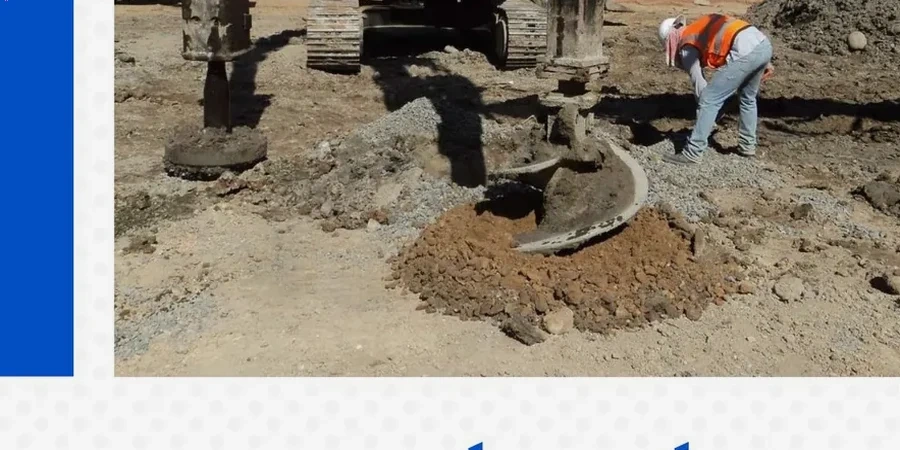
Procedure video
Critical ground factors in Rotorua
Rotorua's expansion through the mid-20th century pushed residential and commercial development onto reclaimed land along the lake margins and into valleys filled with alluvial debris from the Puarenga Stream catchment. These fills were rarely engineered. We have pulled cores from sites near the Government Gardens where three metres of uncompacted pumice and building rubble sit directly above soft lacustrine deposits. Without ground improvement, differential settlement can crack slabs within the first five years. Stone columns mitigate that risk by creating stiff inclusions that transfer load past the fill, but the design must also account for the acidic groundwater common in geothermal areas, which can chemically attack standard aggregates. The team includes a durability assessment based on water sample pH and sulphate content for every Rotorua project, ensuring the column material remains intact for the design life of the structure, typically 50 years for buildings under NZS 4203.
Our services
Our Rotorua work covers the full design sequence, from feasibility screening through to construction-phase verification. Every package is stamped by a CPEng-qualified geotechnical engineer.
Stone Column Design Package
Full unit-cell and group analysis with settlement curves, bulging checks, and aggregate durability specification for Rotorua's acidic groundwater. Includes construction drawings and a technical specification aligned with NZGS Module 3.
Post-Installation Verification
Plate load testing on single columns and groups, multi-level CPT soundings between columns to confirm densification, and cross-hole shear wave velocity profiles to validate the composite ground stiffness before foundation construction begins.
Questions and answers
How much does stone column design cost for a typical Rotorua residential site?
For a standard single-dwelling site in Rotorua, the design package including site investigation review, unit-cell analysis, settlement predictions, and stamped drawings runs between NZ$2,610 and NZ$5,200. Larger commercial or multi-storey projects with group analysis and more extensive verification planning range from NZ$6,500 to NZ$9,220. Every quote is site-specific because the geothermal gradient and soil variability around the caldera can change the required analysis depth significantly.
What site investigation data is needed before stone column design can start?
We need CPT or SPT logs to at least 1.5 times the column depth, laboratory classification of the cohesive layers (Atterberg limits, moisture content), and a groundwater sample for pH and sulphate analysis. For Rotorua sites within 500 m of mapped geothermal surface features, we also recommend a temperature profile from a piezometer to check whether the ground temperature exceeds 40°C at the column base, which affects aggregate selection.
How do you verify that the stone columns are working as designed?
Verification follows a three-stage approach: plate load tests on isolated columns and a three-column group to measure load-settlement response; CPT soundings in the soil between columns to confirm the densification achieved during installation; and cross-hole shear wave velocity measurements to check that the composite ground stiffness matches the design assumptions. We compare all results against the predicted settlement curves from the unit-cell analysis before clearing the site for footing construction.
Can stone columns be used everywhere in Rotorua, given the geothermal activity?
Not everywhere. Sites directly on active geothermal features like hot springs or fumaroles are usually unsuitable for stone columns because the high temperatures and aggressive fluids degrade both the aggregate and the surrounding soil structure over time. We conduct a thermal and chemical screening on every Rotorua project. If the ground temperature at the column tip exceeds 60°C or the pH drops below 4.5, we typically recommend an alternative solution such as driven piles with protective coatings or ground replacement with inert fill.