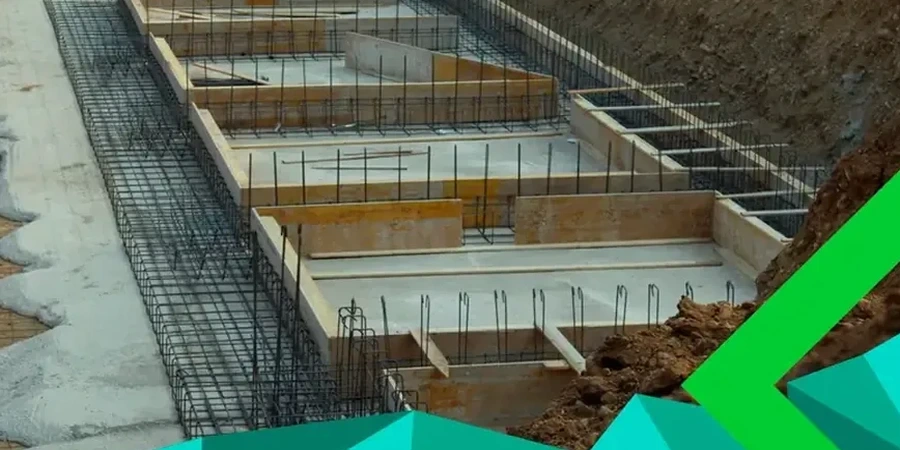
Foundation design in Rotorua is not a one-size-fits-all exercise. This category covers the full spectrum of ground engineering required to safely transfer structural loads into the earth, ranging from robust pile foundation design for weak or variable ground, to raft or mat foundation design that bridges soft spots, and conventional shallow foundation design where competent bearing strata lie near the surface. The overarching goal is to create a stable, durable sub-structure that mitigates the unique geotechnical risks found throughout the Rotorua caldera.
Rotorua's geology is dominated by the Taupō Volcanic Zone, presenting a complex subsurface profile. Designers must contend with highly compressible peat and organic silts around lake margins, liquefiable pumiceous sands and silts, and scattered areas of hydrothermal alteration that can weaken the ground. Variable fill from historic land reclamation adds another layer of uncertainty. These conditions demand a rigorous site-specific investigation to identify the depth to competent bearing layers, which can often be the densely welded ignimbrite rock, and to assess the risk of differential settlement that can tear a poorly designed structure apart.
All foundation work in New Zealand must comply with the joint Australian/New Zealand Standard AS/NZS 1170 for structural design actions, particularly Part 5 for earthquake loads, given Rotorua's high seismic hazard. Geotechnical investigations are governed by NZGS guidelines and must feed into limit state designs conforming to the New Zealand Building Code, primarily via Verification Method B1/VM4. For deep foundations, NZS 4404:2010 provides specific requirements for timber piles, while concrete and steel piling follow NZS 3101 and NZS 3404 respectively. A Producer Statement (PS1 for design, PS4 for construction review) from a Chartered Professional Engineer is the standard pathway to building consent approval.
This category of work is critical for a diverse range of projects. It supports everything from lightweight residential dwellings on tricky sections near Lake Rotorua, where shallow foundation design with reinforced concrete footings might be carefully considered, to large-scale commercial and industrial buildings, multi-storey apartment blocks, and critical infrastructure like bridge abutments. Thermal resorts and their associated structures often require special consideration for high ground temperatures and chemically aggressive soils that can attack concrete and steel, making durable foundation design a non-negotiable part of the project's long-term viability.
Questions and answers
What are the biggest geotechnical challenges for foundations in Rotorua?
The dominant challenges stem from the Taupō Volcanic Zone geology, including highly compressible peat and soft silts near lakes, liquefaction-prone pumiceous sands, and areas of hydrothermal alteration that weaken soil and rock. Variable fill and high seismic activity further complicate design, requiring thorough site investigations to manage the risk of excessive total and differential settlement.
Which New Zealand standards are mandatory for foundation design in Rotorua?
Foundation design must comply with AS/NZS 1170 for structural loads, including seismic actions. Geotechnical work follows NZGS guidelines and the New Zealand Building Code's B1/VM4. Specific material standards like NZS 3101 (concrete), NZS 3404 (steel), and NZS 4404:2010 (timber piles) are applied as relevant. A Producer Statement from a CPEng is typically required for consent.
How deep do foundations typically need to be in Rotorua's geothermal areas?
There is no single typical depth; it depends entirely on the location's specific subsurface profile. In areas with weak surface soils, shallow footings may be impractical, and a deep foundation solution like piles socketed into competent ignimbrite rock, which can be many metres deep, is often necessary. A site-specific geotechnical investigation is essential to determine the appropriate depth and type.
What is the difference between a raft foundation and a pile foundation in local conditions?
A raft foundation spreads structural loads over a large area to 'bridge' soft or variable soils, reducing differential settlement without deep excavation. A pile foundation bypasses weak near-surface layers entirely, transferring loads through friction or end-bearing to a deeper, competent stratum like rock. The choice depends on the depth to bearing, settlement tolerance, and economic considerations.