Rotorua sits inside a caldera. The ground here is unlike anywhere else in New Zealand. Rhyolite lava flows, welded ignimbrite sheets and thick pumice ash layers stack in unpredictable sequences across the city. Groundwater temperatures can reach 160 degrees Celsius just a few metres down. These conditions demand anchor designs that go far beyond standard textbook solutions. The thermal gradient alone can degrade grout and steel if the specification misses local hydrogeology. We combine in-situ permeability testing with geothermal profiling before finalising any bonded length. Most sites around Fenton Street and Whakarewarewa hit thermal water between four and twelve metres. That changes everything about corrosion protection and grout mix design.
Ground anchors in Rotorua must account for thermal gradients that can accelerate corrosion by a factor of three compared to ambient-temperature sites elsewhere on the North Island.
Technical details of the service in Rotorua
Critical ground factors in Rotorua
Anchor performance varies sharply between the Fenton Street commercial corridor and the residential slopes above Kawaha Point. Fenton Street sits on compacted Taupo ignimbrite. Bond stresses here are predictable and the rock mass is dry except where thermal water rises through fractures. Kawaha Point, by contrast, is a different beast. The soil profile is mostly loose pumiceous sand with interbedded silt lenses. Anchors installed without casing in that material collapse mid-hole, and grout takes can double without warning. The biggest risk we see is designers applying generic Auckland basalt parameters to Rotorua rhyolite. It does not work. Bond stress values in saturated pumice can be half the published range for competent rock. Every anchor design here must be validated with on-site suitability testing before the production phase begins. Skipping that step leads to underperformance nobody catches until the wall moves.
Our services
Anchor design work in Rotorua typically falls into two categories. We cover both with the same level of geothermal-specific detailing.
Active anchor design for retaining structures
Post-tensioned anchors for secant pile walls and cantilever retaining walls along arterial roads and commercial builds. Design covers free length calculation, bonded length verification in rhyolite or ignimbrite, lock-off load specification, and staged testing protocols.
Passive anchor and rock dowel design
Untensioned fully grouted bars for slope stabilisation, residential cut faces, and rockfall mitigation above Lake Rotorua. Corrosion protection detail for acidic geothermal soils and long-term creep behaviour in pumice-rich ground are central to every package.
Questions and answers
How much does anchor design and testing cost for a typical Rotorua retaining wall?
For a residential or light commercial retaining wall requiring active or passive anchors in Rotorua, the combined design, installation supervision and on-site load testing package typically falls between NZ$1,720 and NZ$7,170. The spread depends on anchor depth, access constraints, number of anchors to test, and whether thermal water is encountered during drilling.
Which corrosion protection class is mandatory for anchors in Rotorua's geothermal ground?
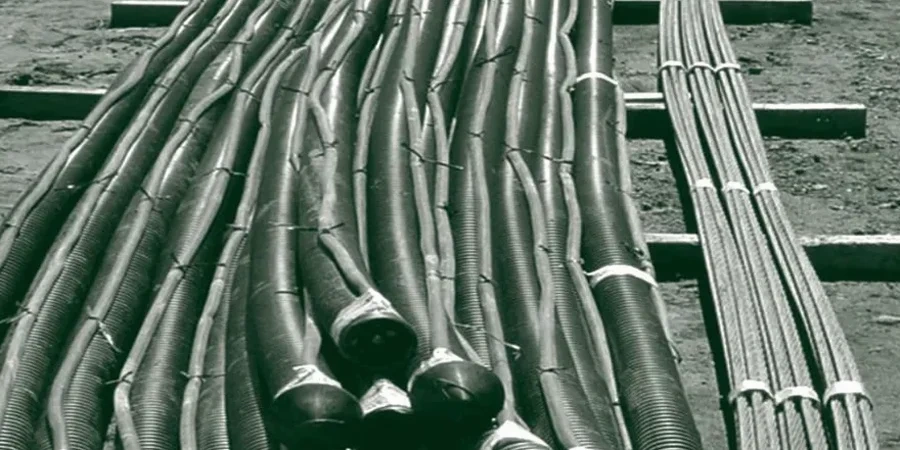
Class II double corrosion protection is the minimum we specify for any permanent anchor in Rotorua. This means a corrugated plastic duct grouted inside the borehole plus a second grout cover around the tendon itself. Where pH drops below 4.5 or H2S is present, we upgrade to full encapsulation with heat-shrink sleeves over the couplers.
What bond stress values do you use in ignimbrite versus pumice?
In competent, dry Taupo ignimbrite we adopt ultimate bond stresses around 1.2 to 1.8 MPa, backed by on-site pull-out tests. In saturated pumiceous sand the value drops to 0.4 to 0.7 MPa. These are not numbers you take from a generic table; each site in Rotorua requires a suitability test because the pumice density and moisture content change over very short distances.
Do you handle the drilling or just the design?
We handle the full design package including specification, load test protocol and construction monitoring. Drilling is subcontracted to local Rotorua crews we have worked with for years, who run rigs set up for cased drilling in hot ground. This keeps the logistics practical and the rates competitive.